


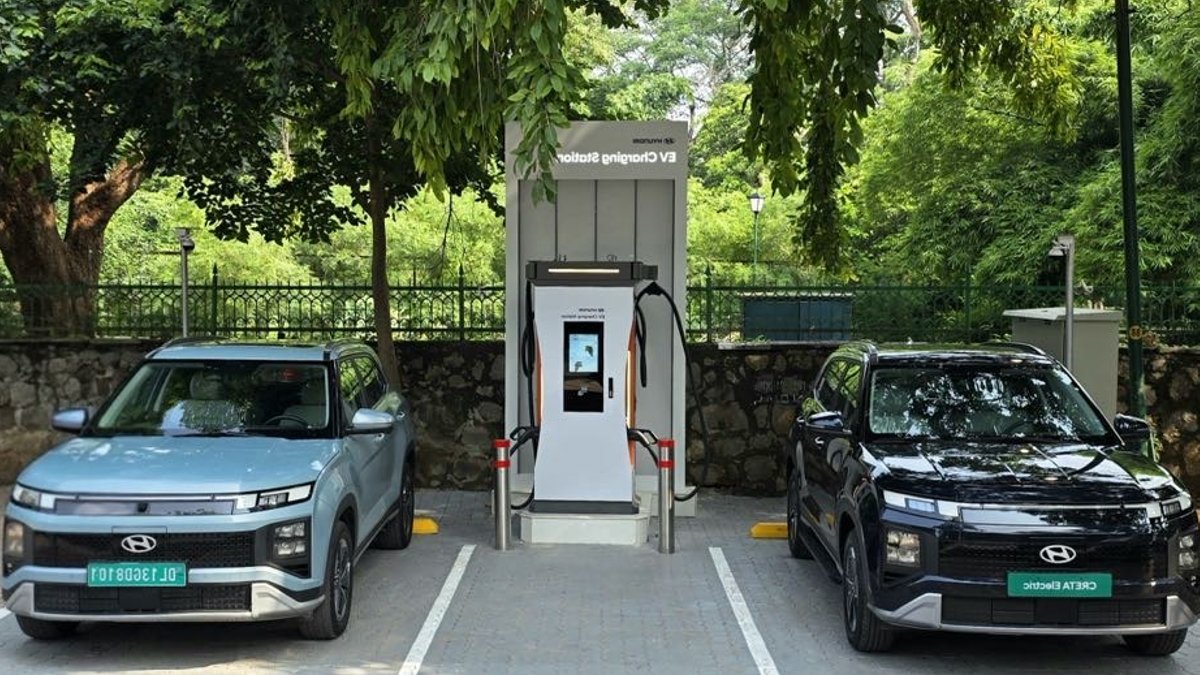
Hyundai Motor India is expanding its electric vehicle ecosystem with the installation of 120kW DC fast-charging stations at key locations in New Delhi. The initiative was announced on World EV Day 2026 and comes as the automaker prepares to broaden its electric vehicle portfolio and strengthen its sales and service infrastructure.
High-Speed Charging Partnerships
The new charging stations are being established in partnership with Statiq and can be accessed through the myHyundai app as well as other major charging-management platforms. Hyundai states the high-speed chargers are intended to reduce charging times and make public charging more convenient for EV users.
As part of its World EV Day initiative, Hyundai EV owners can also access complimentary charging at the company’s own public charging stations between September 9 and September 11, provided the sessions are booked through the myHyundai app.
Expanding the Network
Hyundai currently operates 185 DC fast-charging stations across 105 cities. The company plans to increase this network to 600 stations by 2030, covering major cities, highways and Hyundai dealerships.
Its existing DC fast-charging infrastructure includes chargers ranging from 60kW to 240kW. In addition to its own network, Hyundai says the myHyundai app provides access to more than 38,000 charging points through partnerships with multiple charge point operators.
The application allows users to locate charging stations, handle to them, make advance bookings and complete digital payments. The charging service is also available to EV owners of other brands.
The extensive network of charging points accessible through the myHyundai app shows Hyundai’s commitment to providing full support to its EV customers, ensuring they have a seamless charging experience across the country.
Preparing the Workforce
Hyundai is also investing in training its dealership workforce as electric vehicles become a larger part of its business. More than 2600 dealership service personnel have been trained for EV-related functions so far.
The company plans to train another 5000 service personnel by the end of FY2026-27, covering technicians, service staff, service managers and other employees involved in EV servicing.
According to Hyundai, its EV service training has accounted for approximately 16,000 person-days, while around Rs. 2 crore has been invested in upgrading its training centres for electric vehicle-related requirements.
The training covers areas including high-voltage safety, EV diagnostics, battery handling and specialised repair procedures. Hyundai’s EV-ready workshops are equipped with items such as insulated tools, protective equipment, battery-handling trolleys, EV chargers and specialised service tools.
For the average driver, this means the local service centre will likely have the physical tools and trained staff ready to handle repairs, rather than having to send the vehicle to a distant workshop. The rapid rollout of high-speed chargers also suggests a shift toward making long-distance travel in electric cars a realistic option for everyday commuters.
Expanding Sales Footprint
The automaker has trained more than 10,000 sales personnel in EV-related areas to date. Its target is to increase this figure to more than 17,000 by the end of FY2026-27.
The programme covers EV technology, charging requirements, vehicle capabilities and ownership considerations, allowing dealership teams to provide customers with more detailed information before and after purchase.
Hyundai also plans to expand its EV-ready sales and service footprint to 820 sales touchpoints and 650 workshops by the end of FY2026-27.
New Mass-Market SUV
Hyundai’s current electric vehicle line-up in India consists of the premium IONIQ 5 and the Creta Electric. The company has also confirmed plans to introduce a locally developed and localised mass-market SUV EV based on a dedicated electric vehicle platform.
The company has not disclosed specific details about the upcoming model, including its name, powertrain specifications, battery capacity or launch timeline.
The planned SUV will add another product to Hyundai’s EV portfolio as the company looks to move beyond its existing offerings and cater to a broader section of the Indian market.
By introducing a mass-market electric SUV, Hyundai aims to increase its competitiveness in the growing Indian EV market, offering consumers a wider range of choices and further solidifying its position as a leader in the electric vehicle segment.


