


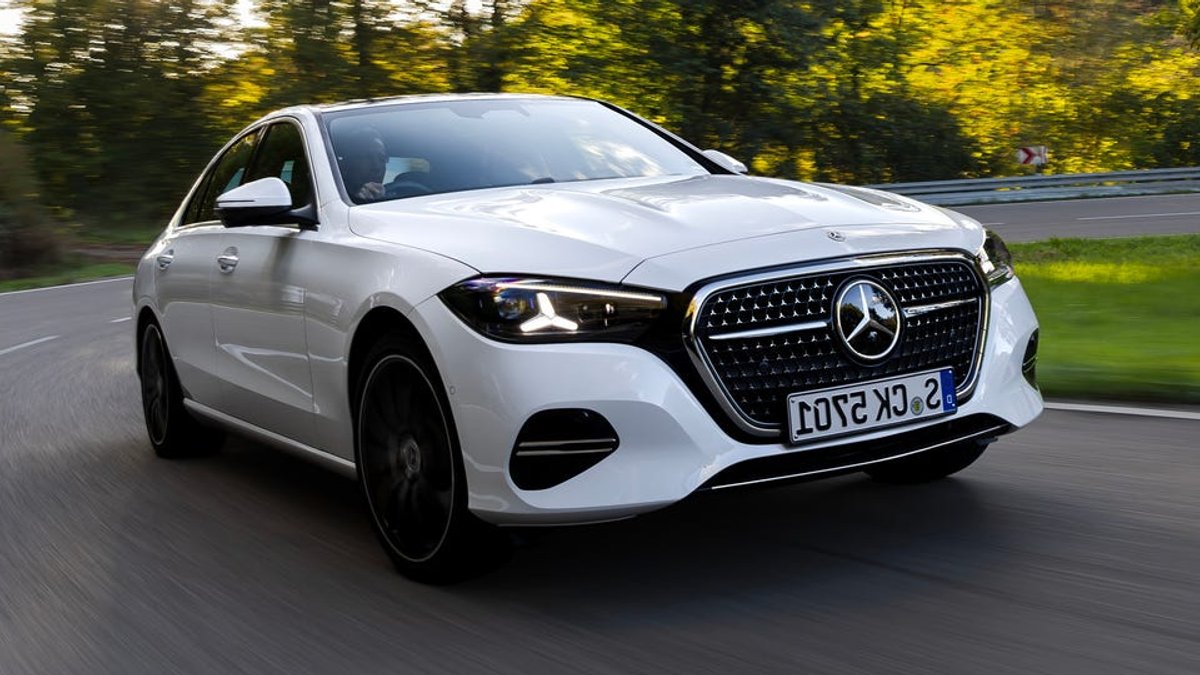
Mercedes-Benz has refreshed its C-Class sedan for 2027, introducing new technology and enhanced power. The C-Class has been a top seller since 1982, with 12 million units sold globally. The 2026 model starts at $50,900, and the 2027 pricing is expected to remain close to this figure, reflecting the median bottom line for any American new car purchase, which is $50,000. This positions the C-Class as a premium yet competitively priced option in its segment.
“The C-Class is the heart of our brand,” stated Thomas Ziller, product manager and team lead for the model. The 2027 model will be available in the US as C350 and C350 4MATIC versions. Design updates are subtle, featuring a larger, more upright grille and extensive LED lighting, including the brand’s new three-point star design for both daytime running lights and taillights. LED lights also project an image on the pavement when doors are opened. Notably, the 2027 model incorporates adaptive headlights that combat road glare, a feature popular in Europe and finally approved for US roads in 2022. Despite carrying over the basic body, greenhouse, and chassis, the vehicle achieves an impressive 0.24 drag coefficient.
New Tech and Safety Features
The 2027 C-Class debuts the MB.OS operating system, which includes over-the-air updates and an AI-based virtual assistant. This assistant integrates ChatGPT, Microsoft Bing, and Google Gemini to manage conversational requests, such as finding songs, podcasts, or answering questions like the origin of the Black Forest’s name. The interior features a 12.3-inch driver display, an 11.9-inch center screen, and Dolby Atmos three-dimensional sound as an option. Ambient interior lighting is available in 64 colors, adding a personalized touch to the cabin.
Safety enhancements include eight cameras, five radar sensors, and 12 ultrasonic sensors for 360-degree views. Standard safety features comprise lane keeping, forward collision warnings, and automatic braking during reversing. The vehicle can also automatically reverse along a recently driven route, aiding in tight parking situations. These features are standard, eliminating the need for optional tech packages.
Performance and Efficiency
The C-Class retains its two-liter, four-cylinder turbo engine but incorporates an updated 48-volt integrated starter generator with an electric compressor. This system eliminates turbo lag and supports coasting and brake regeneration. The engine delivers 255 horsepower and 295 lb-ft of torque, with an additional 23 horsepower and 151 lb-ft from the starter-generator. It accelerates from 0 to 60 mph in an estimated 5.8 seconds and reaches a top speed of 130 mph. The car’s weight is 3,891 pounds for rear-wheel drive and 3,990 pounds for the 4MATIC version.
An overboost feature provides an extra 27 horsepower for up to 20 seconds. The car achieves an unofficial 37.3 mpg, though this figure is not EPA-certified. While a plug-in hybrid variant exists, it will not be available in the US market for the time being.
Driving Experience and Competition
Autoweek tested the C-Class on a pair of long drives in the Black Forest, highlighting its comfort, quiet ride, and precise steering, thanks to new tuned suspension. Although not a high-performance model, AMG variants are anticipated in the future. Buyers can opt for 19-inch AMG wheels and the AMG Line Plus package, which adds exterior visual cues like a spoiler lip, tailpipe trim, and sport seats, offering a taste of AMG ownership without the full performance upgrade.
The C-Class competes with the Toyota Camry Hybrid, priced between $29,000 and $35,500. However, the C-Class distinguishes itself through advanced technology and the prestige of the Mercedes brand. With its blend of luxury, innovation, and performance, the 2027 model is poised to maintain the C-Class as a leading contender in its segment, appealing to buyers seeking both affordability and premium features in the American market.


