


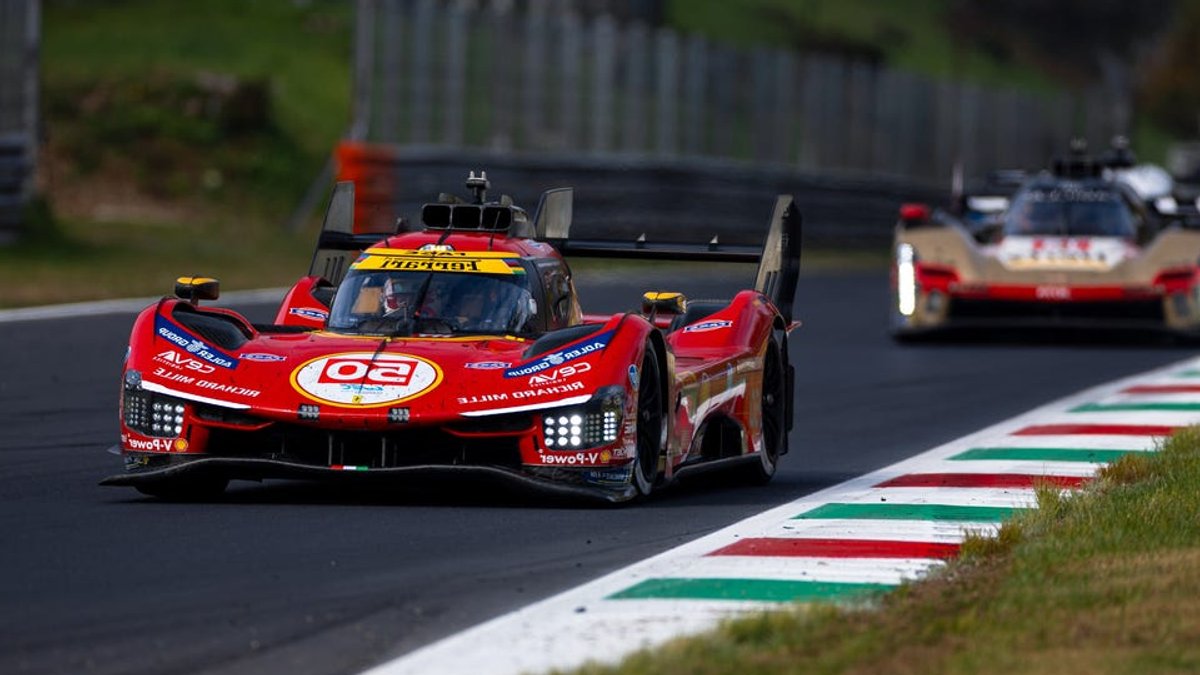
The debate over the future of Balance of Performance (BoP) in endurance racing has intensified as IMSA and the World Endurance Championship (WEC) work toward a unified rule set for 2030. Antonello Coletta of Ferrari has called for its elimination, arguing that it stifles flat-out racing. His comments came during the WEC finale at Monza, where discussions centered on merging the LMH and LMDh rulebooks.
Why BoP Exists
BoP was introduced as a bridge between the LMH and LMDh categories, ensuring competitive parity among manufacturers. With nine factories registered for WEC next year and four in IMSA, the system has encouraged close racing and prevented any single team from dominating. Since 2023, all manufacturers except Peugeot and Aston Martin have secured race wins, highlighting BoP’s role in maintaining competition.
Recent withdrawals by Acura and Alpine, along with Porsche’s decision to limit its 963 to IMSA, illustrate the financial pressures teams face. By adjusting power-to-weight ratios and other parameters, BoP keeps costs in check while ensuring diverse winners.
The Case Against BoP
Critics, however, contend that BoP introduces arbitrary rules prone to bias. The WEC’s decision to keep adjustments private and IMSA’s gag order on participants discussing BoP choices have fueled skepticism.
Future Rule Changes and Competitive Risks
The 2030 regulations are expected to permit manufacturers to design their own chassis alongside current licensed builders. This change raises concerns about a single supplier building a superior vehicle. Additionally, the presence of “jokers” allows cars to be redeveloped in terms of aerodynamics, chassis, braking, and hybrid drivelines. This flexibility undermines the system‘s ability to control spending budgets.
A Middle Ground
One proposed solution is to adopt a “success ballast” system, similar to that used in LMGT3. This method adjusts lap times based on podium finishes and championship standings, but it risks creating an unequal field and incentivizing point-chasing over outright performance.
As IMSA and WEC move toward 2030, the fate of BoP remains a central issue. While it has ensured competitive racing, its drawbacks cannot be ignored. The challenge lies in finding a system that preserves the spirit of endurance racing while addressing the concerns of teams, fans, and organizers alike.


